

How Hydrafacial Works: A Step-by-Step Breakdown
Hydrafacial has become one of the most widely performed professional facial treatments in the world. Dermatology clinics and skincare studios use it because it combines several essential steps of skin health into a single treatment.
But many people still wonder the same thing:
What actually happens during a Hydrafacial?
Understanding how the treatment works helps explain why it can improve skin texture, hydration, and clarity while remaining gentle on the skin.
Hydrafacial is a type of hydradermabrasion treatment, meaning it combines exfoliation with hydration at the same time. Instead of relying solely on manual techniques like traditional facials, it uses a specialized device that cleanses, exfoliates, extracts impurities, and infuses hydrating ingredients in a controlled process.
The treatment works through a technology known as Vortex-Fusion, which allows the skin to be exfoliated and nourished simultaneously.
Clinical research published in dermatology journals has shown that a series of Hydrafacial treatments can improve several markers of skin quality, including hydration, texture, pore size, and the appearance of fine lines.
To understand why, it helps to look at what happens during each stage of the treatment.
The Skin Renewal Cycle and Why Exfoliation Matters
Your skin constantly renews itself.
New cells form deep within the epidermis and slowly move toward the surface. Once they reach the outer layer, they eventually shed to make room for new cells.
This natural renewal cycle typically takes about 28 to 40 days depending on age and skin health.
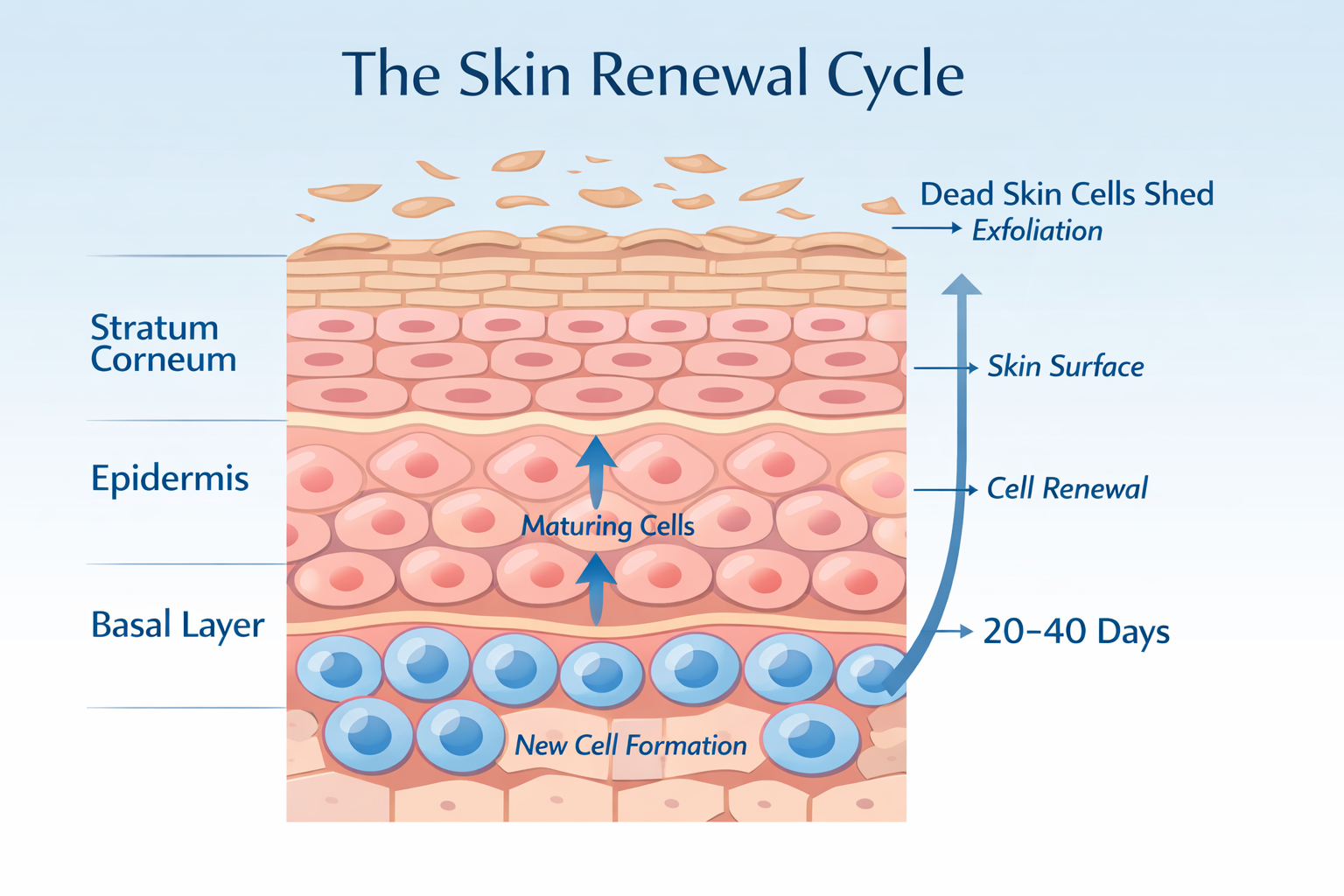
As we age, this cycle slows down. When dead skin cells remain on the surface longer than they should, they can lead to:
dull skin
uneven texture
clogged pores
reduced absorption of skincare products
Exfoliation helps accelerate this process by removing buildup on the surface of the skin.
Hydrafacial treatments are designed to support this renewal cycle by combining mechanical exfoliation, chemical exfoliation, and hydration in a single treatment.
This combination allows the skin to shed dead cells while simultaneously restoring moisture and nutrients.
What Makes Hydrafacial Different From a Traditional Facial
Traditional facials usually involve:
manual cleansing
exfoliating scrubs or enzymes
hand-performed extractions
masks and moisturizers
These treatments can improve skin health, but they rely heavily on manual techniques.
Hydrafacial takes a different approach.
Instead of performing each step separately, the Hydrafacial device performs multiple steps simultaneously using a specialized handheld applicator.
This technology allows the treatment to:
exfoliate the skin evenly
remove impurities from pores
deliver hydrating ingredients at the same time
Because the device controls pressure and delivery of solutions, the treatment is consistent across the entire face.
This consistency helps reduce irritation while still achieving deeper cleansing.
The Technology Behind Hydrafacial: Vortex-Fusion
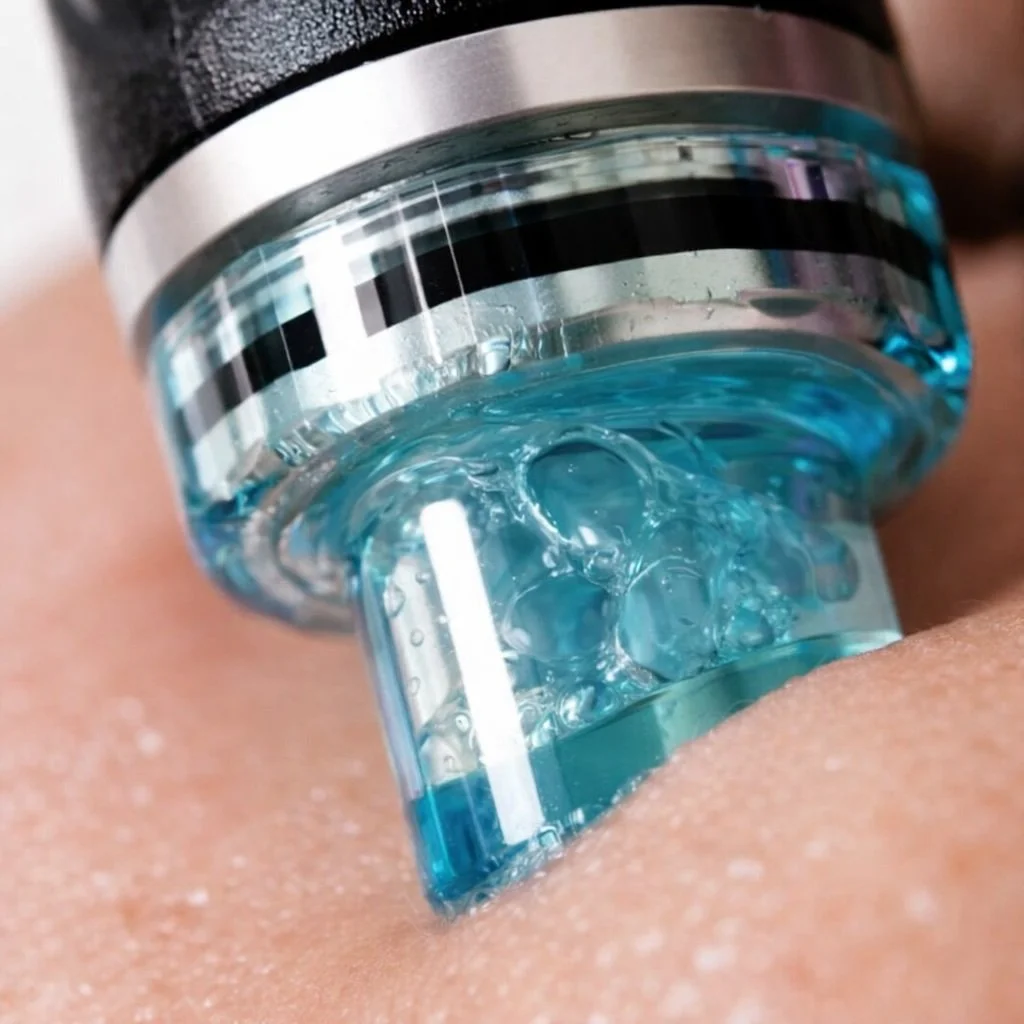
At the center of the Hydrafacial treatment is the Vortex-Fusion delivery system.
This technology uses a spiral-shaped tip that creates a vortex effect when liquid solutions and suction are applied to the skin.
The vortex allows the device to perform three actions at the same time:
exfoliation
extraction
hydration
The spiral tip gently lifts debris from the skin while delivering treatment solutions into the pores.
Hydrafacial technology uses dermabrasion tips designed to lift impurities while infusing nourishing ingredients, which helps maximize absorption and improve the effectiveness of the treatment.
Because exfoliation and hydration occur together, the skin can be treated more efficiently and comfortably than with many traditional resurfacing methods.
Step-by-Step: What Happens During a Hydrafacial
Although treatment protocols may vary depending on skin concerns, most Hydrafacial treatments follow four core steps.
Step 1: Cleansing and Exfoliation
The first step prepares the skin by removing the outer layer of dead skin cells.
During this phase, the Hydrafacial device uses a gentle resurfacing tip combined with a cleansing solution to loosen and remove debris from the skin's surface.
This process helps:
clear dead skin cells
smooth rough texture
improve the absorption of skincare ingredients
Removing this outer layer allows healthier skin cells underneath to become visible.
Many people notice that their skin appears brighter immediately after this step.
Step 2: Gentle Chemical Exfoliation
After surface exfoliation, the treatment introduces a mild chemical peel.
Hydrafacial commonly uses a blend of:
glycolic acid
salicylic acid
These acids help dissolve debris within the pores.
Glycolic acid loosens the bonds between dead skin cells, which helps smooth the skin's surface.
Salicylic acid penetrates oil within the pores and helps break down excess sebum and buildup.
Because the acid concentrations are relatively mild, the treatment provides exfoliation without the peeling or downtime associated with stronger chemical peels.
Step 3: Automated Pore Extractions
One of the most distinctive parts of the Hydrafacial treatment is the extraction phase.
Traditional facials often perform extractions manually by applying pressure to the skin.
Hydrafacial instead uses controlled suction to remove impurities from pores.
This suction helps remove:
excess oil
blackheads
dead skin cells
environmental debris
Because the suction is distributed evenly through the spiral tip, the process can be gentler than manual extractions.
Many clients also find this step interesting because the debris removed from the pores collects in a clear container.
What Hydrafacial Actually Removes From Pores
Pores can collect several types of debris over time.
Hydrafacial helps remove many of these materials.
Sebum
Sebum is the natural oil produced by the skin. While it protects the skin barrier, excess sebum can accumulate in pores and contribute to congestion.
Dead Skin Cells
Skin constantly sheds cells as part of its renewal process. When these cells are not removed efficiently, they can collect inside pores.
Environmental Debris
Pollution, dust, and other particles can settle on the skin throughout the day and mix with oil and sweat.
Oxidized Oil
Blackheads form when oil trapped inside a pore is exposed to air and oxidizes.
Hydrafacial suction helps remove this oxidized oil along with other debris.
Clearing these materials can help pores appear cleaner and less congested.
Step 4: Hydration and Serum Infusion
After exfoliation and extraction, the treatment focuses on restoring hydration.
Hydrafacial infuses the skin with serums containing ingredients such as:
hyaluronic acid
antioxidants
peptides
Hyaluronic acid helps the skin retain water, improving hydration and elasticity.
Antioxidants help protect the skin from environmental stressors such as pollution and UV exposure.
Peptides support structural proteins that contribute to skin firmness.
Because the skin has just been exfoliated and cleared of debris, these ingredients can penetrate more effectively.
Studies have shown that hydradermabrasion treatments can increase absorption of topical skincare ingredients compared with manual application alone.
Clinical Research on Hydrafacial Results
Clinical studies evaluating Hydrafacial treatments have measured several improvements in skin quality.
Researchers have observed statistically significant improvements in:
hydration
pore size
fine lines
skin texture
hyperpigmentation
dullness
These improvements were observed after a series of treatments.
Other clinical testing has shown increased hydration levels and visible improvements in fine lines shortly after treatment.
These findings support the idea that combining exfoliation and hydration can help improve overall skin health.
Why Hydrafacial Has Little to No Downtime
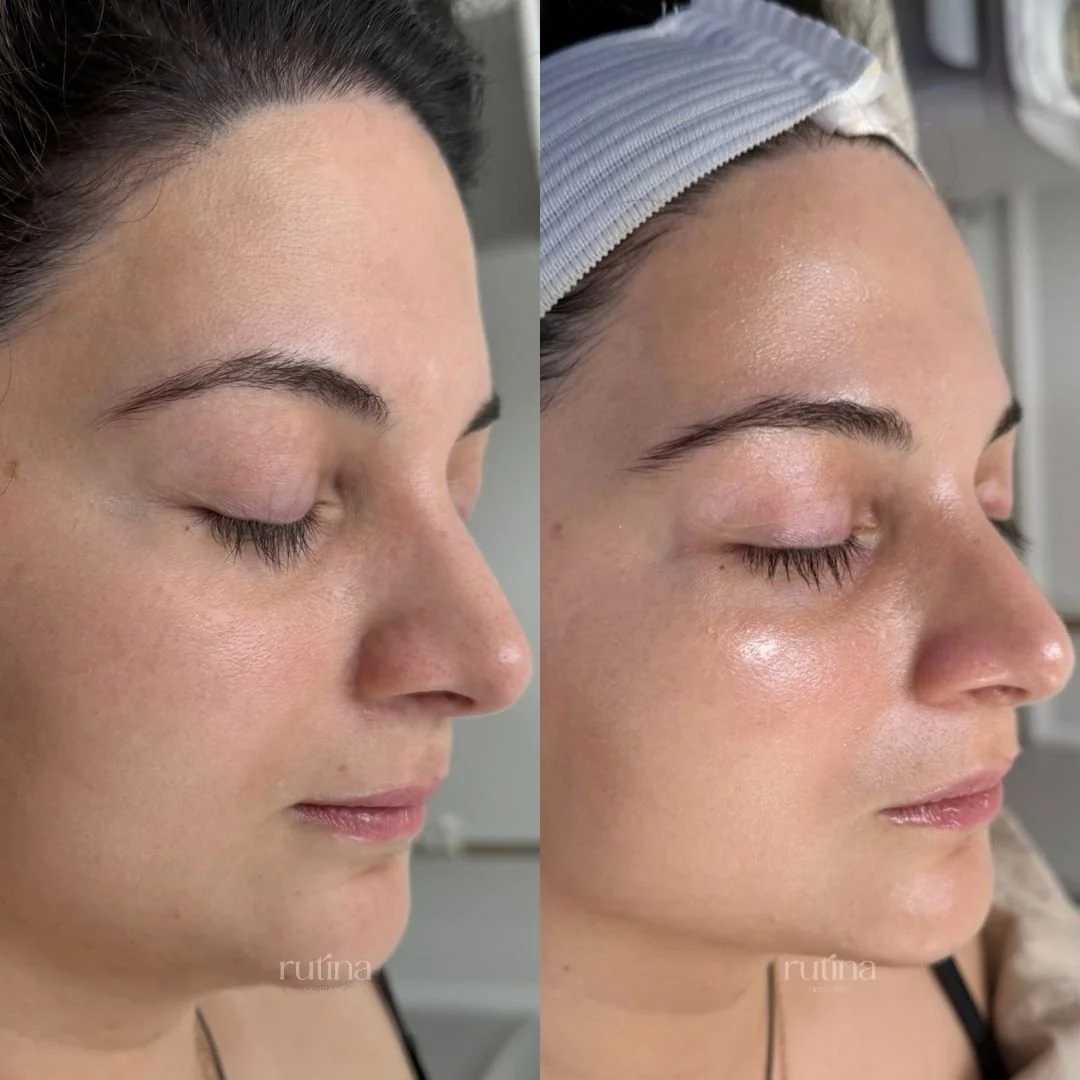
Many resurfacing treatments create redness or peeling because they intentionally damage the skin to stimulate regeneration.
Hydrafacial works differently.
Because the treatment uses controlled exfoliation and mild chemical solutions, it does not cause the same level of irritation associated with deeper peels or laser treatments.
Most people experience only mild redness that fades quickly.
Many clients return to normal activities immediately after the treatment.
How Often Hydrafacial Treatments Are Performed
Skin renewal typically occurs every four to six weeks.
For this reason, many people schedule Hydrafacial treatments about once per month.
Regular treatments help maintain:
consistent exfoliation
hydration levels
pore clarity
Over time, repeated treatments may help support healthier skin and more consistent skin texture.
Final Thoughts
Hydrafacial treatments combine several important skincare steps into one process.
By cleansing, exfoliating, extracting impurities, and delivering hydrating ingredients, the treatment addresses multiple aspects of skin health at once.
The technology behind Hydrafacial allows these steps to occur simultaneously, which improves efficiency while minimizing irritation.
Understanding how the treatment works helps explain why Hydrafacial has become one of the most widely used professional facial treatments today.
Consistent skincare treatments combined with a good home routine can help maintain healthier, clearer, and more hydrated skin over time.